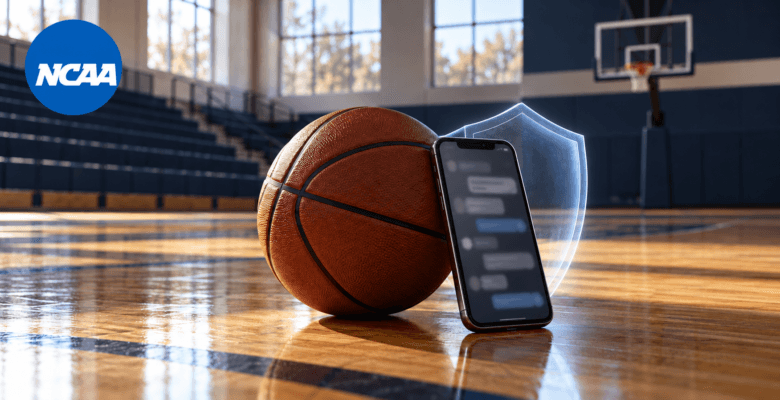
The NCAA has joined the Bad Actor Program, expanding its efforts to identify people who threaten or harass student-athletes, coaches, and officials online. Announced on October 29, its participation connects monitoring across NCAA Championships with an initiative that enables participating sportsbooks to take action against abusive customers.
Developed by Integrity Compliance 360 and Signify Group, the program combines social media intelligence, investigations, and information sharing. The NCAA said it is the first sports governing body to publicly announce participation. Fanatics Sportsbook was the first betting operator to join, committing to suspend or permanently terminate accounts when customers are found to have engaged in prohibited abusive conduct.
“Athlete harassment has no place in college sports,” NCAA President Charlie Baker said. “The NCAA is committed to working with stakeholders across the sports betting ecosystem to eradicate this horrific behavior that plagues sports far too often, and that is why the NCAA is the first sport governing body to participate in the Bad Actor Program. The NCAA has led efforts to better understand and address online harassment, and we are proud to support new tools that increase accountability for those who target student-athletes, coaches and officials.”
Under the program, Signify’s Threat Matrix service monitors public online activity and accepts reports of abusive direct messages from athletes and officials. Analysts assess incidents by severity, investigate serious cases, and prepare evidence for relevant organizations or law enforcement where appropriate. Verified incidents and identified individuals can be shared through IC360’s ProhiBet Bad Actor platform, allowing participating sportsbooks to consider restrictions on wagering access.
Research documents betting-related threats across college sports
The NCAA’s involvement builds on its work with Signify, which began in 2023. Findings published in October 2024 drew on a championship monitoring pilot in which analysts reviewed more than 72,000 messages flagged from a wider dataset of 1.3 million posts and comments. More than 5,000 messages were verified as abusive, discriminatory, or threatening.
Sports betting was directly associated with 12% of verified abuse in that study. March Madness participants received 80% of all verified abusive content, while women’s basketball student-athletes received approximately three times as many threats as their male counterparts. One student-athlete received more than 1,400 abusive messages in less than two weeks.
Separate findings from the 2025 Growth, Opportunities, Aspirations and Learning of Students in College study documented athletes’ own experiences. Among Division I men’s basketball respondents, 51% reported social media abuse connected to their athletic performance, and 46% reported negative or threatening messages from someone who had bet on their game. The wider survey included responses from more than 20,000 student-athletes across all three NCAA divisions.
Clint Hangebrauck, the NCAA’s managing director of enterprise risk management, said monitoring and athlete surveys had helped the association understand the scale and sources of abuse and supported responses when threatening conduct was identified. The NCAA also addresses betting-related harassment through its Draw the Line campaign, including the “Don’t Be a Loser” public service announcement.
Protection efforts extend beyond social media and sportsbook accounts. Through a collaboration announced in August 2025, Venmo established a dedicated reporting hotline, safety guidance, and account support for student-athletes experiencing unwanted interactions. Venmo said it would monitor affected accounts, help implement additional security measures, and educate users that harassment through payment requests could result in account closure.