Minnesota prediction market ban blocked by federal judge
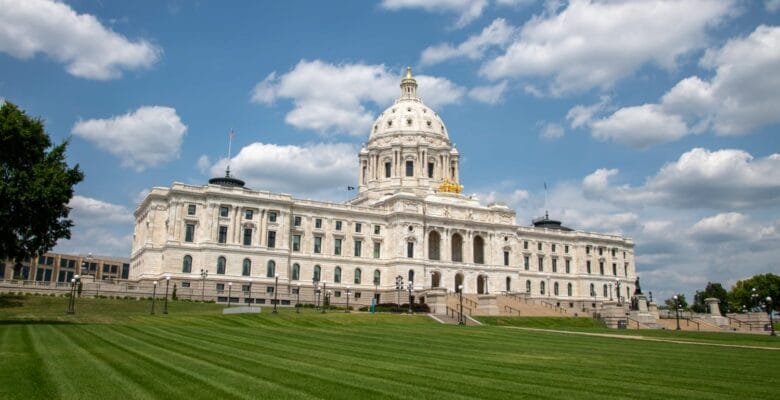
A federal judge has issued a preliminary injunction preventing Minnesota from enforcing its first-in-the-nation ban on prediction markets before the law is due to take effect on August 1. The ruling preserves the current legal position for covered entities while the court considers a challenge brought by the Commodity Futures Trading Commission (CFTC), Kalshi, and Polymarket.
The lawsuit argues that Minnesota’s law is preempted by the federal Commodity Exchange Act (CEA), which grants the CFTC exclusive jurisdiction over swaps traded on designated contract markets (DCMs). U.S. District Judge Katherine Menendez found that the plaintiffs were likely to succeed, at least in part, on their preemption claims and concluded that a preliminary injunction was appropriate while the litigation continues.
Court finds federal preemption claims likely to succeed
In her order, Menendez wrote that Minnesota’s prediction market statute is “likely at least partially preempted” by the CEA because the CFTC has been given exclusive jurisdiction over transactions involving swaps traded on designated contract markets. She also stated that granting a preliminary injunction “strikes the right balance of harms while preserving the status quo.”
The judge specified that the ruling applies to entities registered with the CFTC as designated contract markets. At the same time, she noted that the plaintiffs had not shown every event contract qualifies as a swap under federal law, meaning the state statute may not be preempted in every application.
Minnesota became the first U.S. state to enact an outright ban on prediction markets after Governor Tim Walz signed the legislation in May. The measure would make it a felony to create, operate, or promote a prediction market platform within the state. Minnesota and other states argue that much of the activity on prediction market platforms constitutes sports betting and therefore falls within state gambling regulation.
Minnesota Attorney General Keith Ellison said the state disagrees with the court’s decision, describing prediction markets as “gambling, plain and simple.” He said Minnesota has the authority to keep what he called predatory gambling out of its communities and confirmed that his office will continue defending the law as the case proceeds.
Kalshi and Polymarket welcomed the ruling. Polymarket Chief Legal Officer Neal Kumar said the decision confirms that prediction markets offered on CFTC-registered exchanges are governed by federal law rather than a patchwork of state rules. Kalshi spokesperson Elisabeth Diana said states cannot prohibit activities that fall outside their jurisdiction.
The Minnesota case is one of several legal disputes over the regulation of prediction markets in the United States. States have sought to regulate or prohibit operators, including Kalshi and Polymarket, under gambling laws, while the CFTC maintains that federal law governs qualifying event contracts. Separately, the regulator has begun a rulemaking process to determine which types of event contracts should be considered contrary to the public interest and therefore barred from listing on CFTC-regulated prediction markets.